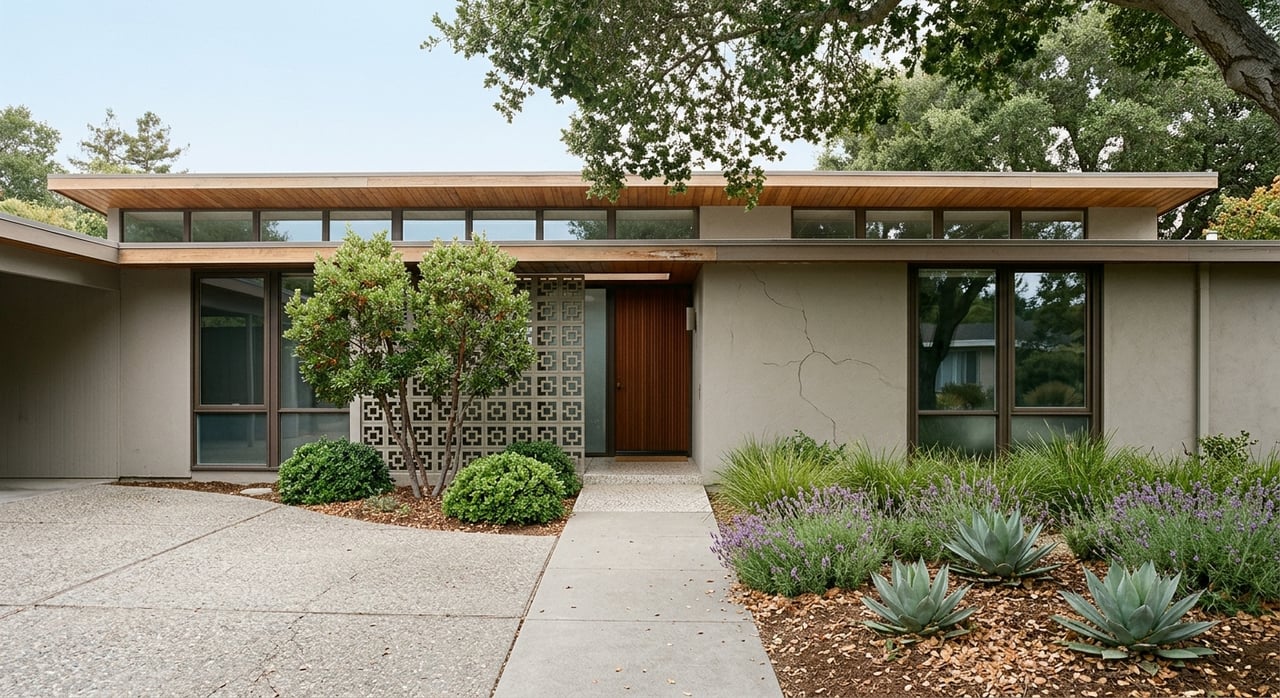
If you are drawn to clean lines, walls of glass, and homes that feel connected to the outdoors, Palo Alto’s Eichler neighborhoods tend to stand out fast. They offer a distinct way of living that feels different from a typical subdivision, and that difference matters when you are deciding where and how you want to live. If you are considering one of these homes, it helps to understand not just the architecture, but also the day-to-day experience, the neighborhood context, and the trade-offs. Let’s dive in.
Palo Alto has a deep Eichler footprint
Palo Alto is not home to just a handful of Eichlers. The city’s guidelines identify 32 Eichler tracts, including Fairmeadow, Green Gables, Greenmeadow, Charleston Meadows, Edgewood, Triple El, Los Arboles, and the later Community Center tract.
That broad footprint is one reason Eichlers remain such an important part of Palo Alto’s housing identity. You are not looking at a single isolated pocket. You are looking at a citywide collection of neighborhoods with shared design roots, but meaningful differences from one tract to the next.
Not all Eichler neighborhoods are the same
One of the biggest misconceptions is that all Palo Alto Eichlers offer the same experience. They do not. Tracts vary by era, architect, layout, condition, and neighborhood oversight.
Some areas also carry added preservation context. Green Gables and Greenmeadow are listed among Palo Alto’s four National Register historic districts, which gives those neighborhoods a historic identity in addition to their architectural significance.
In practical terms, that means your experience can vary depending on where you buy. A home in one tract may have a different streetscape, a different mix of original and updated homes, and different expectations around exterior changes than a home in another tract.
What the homes feel like
Most Palo Alto Eichlers are one-story, post-and-beam homes with a strong horizontal profile. Many center around an atrium or courtyard, and their windows are arranged to reduce direct views into neighboring homes.
That design creates a very specific feel inside. Instead of a house that turns inward room by room, you often get a home that feels open, airy, and visually tied to patios, courtyards, and backyards. The value is often less about maximizing square footage and more about how the space lives day to day.
From the street, the architecture tends to be understated rather than flashy. Shallow roofs, exposed rafters, clerestory windows, rear walls of glass, and low fencing or planting all contribute to a low-profile look that is easy to recognize once you know what to look for.
Why the streetscape feels different
A big part of Eichler living is not just the house itself. It is the way the neighborhood is planned. Palo Alto’s research describes these neighborhoods as leafy, private, and social, with design features that encourage interaction without making the homes feel exposed.
Roundabouts and cul-de-sacs help calm traffic in some tracts. Sidewalks and bike paths support an active, connected feel. The city also notes that prominent tree canopy, open front yards, atria, and rear glass help small lots feel larger while still preserving backyard privacy.
That combination can be appealing if you want a neighborhood that feels visually open without feeling crowded. In many Eichler areas, the effect is subtle but noticeable. You get a strong sense of design continuity, and the streets often feel calm and cohesive.
Greenmeadow shows the community appeal
Greenmeadow is one of the clearest examples of the community side of Eichler living. City research highlights its community center, park, meeting room, and pool, and the neighborhood association describes the area as being planned around shopping, libraries, schools, a community center, a pool, and a park.
Today, the association describes Greenmeadow as a swim club and community association with pool programs, picnics, seasonal parties, a July 4 celebration, and event rentals. For some buyers, that kind of built-in neighborhood activity is a major draw.
Of course, not every Eichler tract functions the same way. Still, Greenmeadow helps illustrate why Eichler neighborhoods are often discussed as lifestyle neighborhoods, not just architectural ones.
The indoor-outdoor lifestyle is real
If you love the idea of living in a home that changes with the light and seasons, Eichlers can be especially compelling. Their design leans heavily into the connection between interior spaces and outdoor areas.
Atriums, courtyards, and rear glass shift the home experience away from a strictly enclosed floor plan. In many cases, you feel the landscape from inside the home much more directly than you would in a more conventional house. That can make everyday living feel calmer, brighter, and more open.
This is often the real lifestyle hook for buyers. Leafy streets, a neighborly layout, and a house that feels tied to the outdoors are recurring reasons people specifically seek out Eichlers in Palo Alto.
What buyers should consider carefully
Design appeal is only part of the decision. Eichlers are distinctive homes, and they often require a more thoughtful due diligence process than a newer or more conventional property.
The city flags several upgrade areas buyers commonly encounter. These can include flat-roof repairs, insulation improvements, updated glazing, radiant-heat or mechanical updates, and work involving carports or nonstandard siding.
That does not mean every property needs the same scope of work. It does mean you should go in with a realistic budget and a clear sense of priorities. With Eichlers, the right question is often not just, "How much house am I getting?" but also, "How well has this house been maintained and updated for the way I want to live?"
Remodeling can be possible, but context matters
Many buyers want to know whether they can remodel an Eichler. In many cases, yes, but the answer depends on the tract, the home, and the type of work you want to do.
The city says Greenmeadow, Edgewood, and Charleston Meadows have Architectural Control Committees that review exterior proposals under neighborhood CC&Rs. The city also notes that it does not enforce those CC&Rs, which means neighborhood-level review can be a separate consideration from city approval.
Historic-district context can matter too, especially in places like Green Gables and Greenmeadow. If you are considering exterior changes, it is important to understand both the city framework and any tract-specific review environment before you finalize your plans.
Why long-term planning matters
Eichler neighborhoods tend to have a strong visual rhythm. That rhythm is part of what attracts buyers in the first place, so future changes to a property deserve careful thought.
According to the city, second-story additions, taller foundations in flood zones, two-story new construction, and some ADUs can disrupt privacy and neighborhood cohesion. For that reason, new work in Eichler tracts is generally expected to remain visually compatible with the existing one-story pattern.
If you are buying with renovation goals in mind, this is where early planning becomes important. A design-forward home can be rewarding, but it also benefits from a design-forward approach to due diligence and improvement planning.
How to decide if an Eichler fits you
An Eichler may be a strong fit if you value architecture, single-level living, natural light, and a strong indoor-outdoor connection. It can also make sense if you appreciate neighborhoods with a consistent look and a quieter, more cohesive streetscape.
At the same time, these homes are usually best for buyers who are comfortable with a less conventional housing product. If your priority is maximum square footage, a typical enclosed floor plan, or minimal planning around future upgrades, another Palo Alto neighborhood may fit better.
The key is to match the home to your lifestyle, budget, and long-term plans. In Palo Alto, Eichlers offer a very specific living experience, and for the right buyer, that experience is hard to duplicate.
If you want help comparing Eichler tracts, evaluating a specific property, or planning a smart buying strategy in Palo Alto, Christopher Mogensen can help you move forward with clear, local guidance.
FAQs
What makes Palo Alto Eichler neighborhoods different from other Palo Alto neighborhoods?
- Palo Alto Eichler neighborhoods are known for post-and-beam architecture, one-story layouts, atriums or courtyards, open front-yard streetscapes, and a strong indoor-outdoor living feel.
Are all Palo Alto Eichler homes designed the same way?
- No. Palo Alto’s Eichlers span 32 tracts, and they vary by era, architect, design details, condition, and neighborhood review context.
Do Palo Alto Eichler neighborhoods have historic-district status?
- Some do. Green Gables and Greenmeadow are listed among Palo Alto’s four National Register historic districts.
Can you remodel a home in a Palo Alto Eichler neighborhood?
- Often yes, but exterior changes may be shaped by city review, historic-district context, and in some neighborhoods, Architectural Control Committee review under tract CC&Rs.
What should buyers budget for in a Palo Alto Eichler home?
- Buyers should be prepared to evaluate potential costs for flat-roof repairs, insulation, glazing, radiant-heat or mechanical updates, and work related to carports or nonstandard siding.
Which Palo Alto Eichler neighborhood is known for community amenities?
- Greenmeadow is especially known for its community center, park, meeting room, pool, and neighborhood association activities.